Phalaenopsis is a very popular orchid genus originating from southeast Asia, with several horticultural varieties. The fine specimen above was photographed in Puerto de la Cruz, in Tenerife.
Showing posts with label places. Show all posts
Wednesday, January 18, 2012
Thursday, January 12, 2012
Death of a Phoenix
Palms are a common sight in Malta, with the warm temperatures affecting the islands throughout most of the year being a perfect catalyst for their growth and proliferation. This said, indigenous species amount to just one - the low-growing, bushy Chamaerops humilis L., now practically extinct in the wild.
| Chamaerops humilis L., photographed by Aron Tanti |
The recent invasion of the red palm weevil Rhynchophorus ferrugineus (Olivier, 1790) has affected several of the ornamental palms of the genus Phoenix.
The date palm, Phoenix dactylifera L., is a historically important North African species that may be distinguished by leaves arranged in wide silvery fronds. The picture beneath shows this species of palm affected by the Rhynchophorus beetle.
| Rhynchophorus ferrugineus (Olivier, 1790) from www.cm-oaz.pt |
The date palm, Phoenix dactylifera L., is a historically important North African species that may be distinguished by leaves arranged in wide silvery fronds. The picture beneath shows this species of palm affected by the Rhynchophorus beetle.
![]() |
| Phoenix dactylifera L. affected by the red palm weevil in Santa Venera, Malta |
| Phoenix sp. in Rome, Italy, with the one on the right showing symptoms of red palm weevil infestation |
Phoenix canariensis Chabaud is a Canarian endemic which is frequently planted around the Mediterranean, not least in Malta. Unfortunately it is also affected by the weevil in question and several stately specimens from around the island have been destroyed.
![]() |
| Phoenix canariensis Chabaud in the main road of Floriana, Malta |
![]() |
| The inhabitants of Tenerife certainly make excellent use of their endemic palm species! |
Labels:
Arthropoda,
Chamaerops humilis,
Coleoptera,
Insecta,
Italy,
malta,
maltese islands,
Mediterranean,
Phoenix canariensis,
Phoenix dactylifera,
places,
Rhynchophorus ferrugineus,
Rome,
Spain,
Tenerife
Monday, October 10, 2011
Nature class
Juniper, yew, spruce and other specimens with textbook shown below, for observation during a lesson. Photos taken at the Základní škola Lesní (an elementary school in Liberec, the Czech Republic).
Sunday, October 9, 2011
Field biology course for educators
A group of 27 biology teachers from Church schools recently attended a week-long course in field biology jointly organised by the University’s Department of Biology and the Curia’s Secretariat for Education at the University.
The course was aimed at updating educators on methodology related to fieldwork organisation.
It is widely recognised that the teaching of biology is most enriching and interesting for students when the learning process takes place ‘outside the classroom’ and in a ‘real world’ setting.
The course consisted of lectures, fieldwork and laboratory sessions, with a focus on the Maltese environment. During the week, participants had the opportunity to put theoretical knowledge into practice through planning and preparation for fieldwork, surveying, sampling and data collection, and processing of the data collected.
Topics covered during the course were related to shore and terrestrial ecology.
During the shore ecology fieldwork, held on the Għallis coast, participants identified flora and fauna that inhabit rocky shores, and collected data on the abundance of selected fauna. During the terrestrial ecology fieldwork, held at Clapham Junction and Buskett, participants observed typical Mediterranean vegetation communities: garigue, steppe, maquis, and woodland.
The knowledge and applications learnt during the marine and terrestrial fieldwork sessions was synthesised during a site visit to Għajn Tuffieħa.
A variety of habitats was explored there, ranging from banquettes of Posidonia oceanica wrack deposited on the sandy beach, to the terrestrial boulder scree that constitutes the typical Maltese rdum habitat.
The lectures, field and laboratory sessions were led by Joseph Borg, Patrick Schembri and Sandro Lanfranco from the University’s Biology Department.
Originally published in The Sunday Times, 9.X.2011.
Wednesday, October 5, 2011
Ups and downs
Monday, October 3, 2011
Into the forests of Liberec
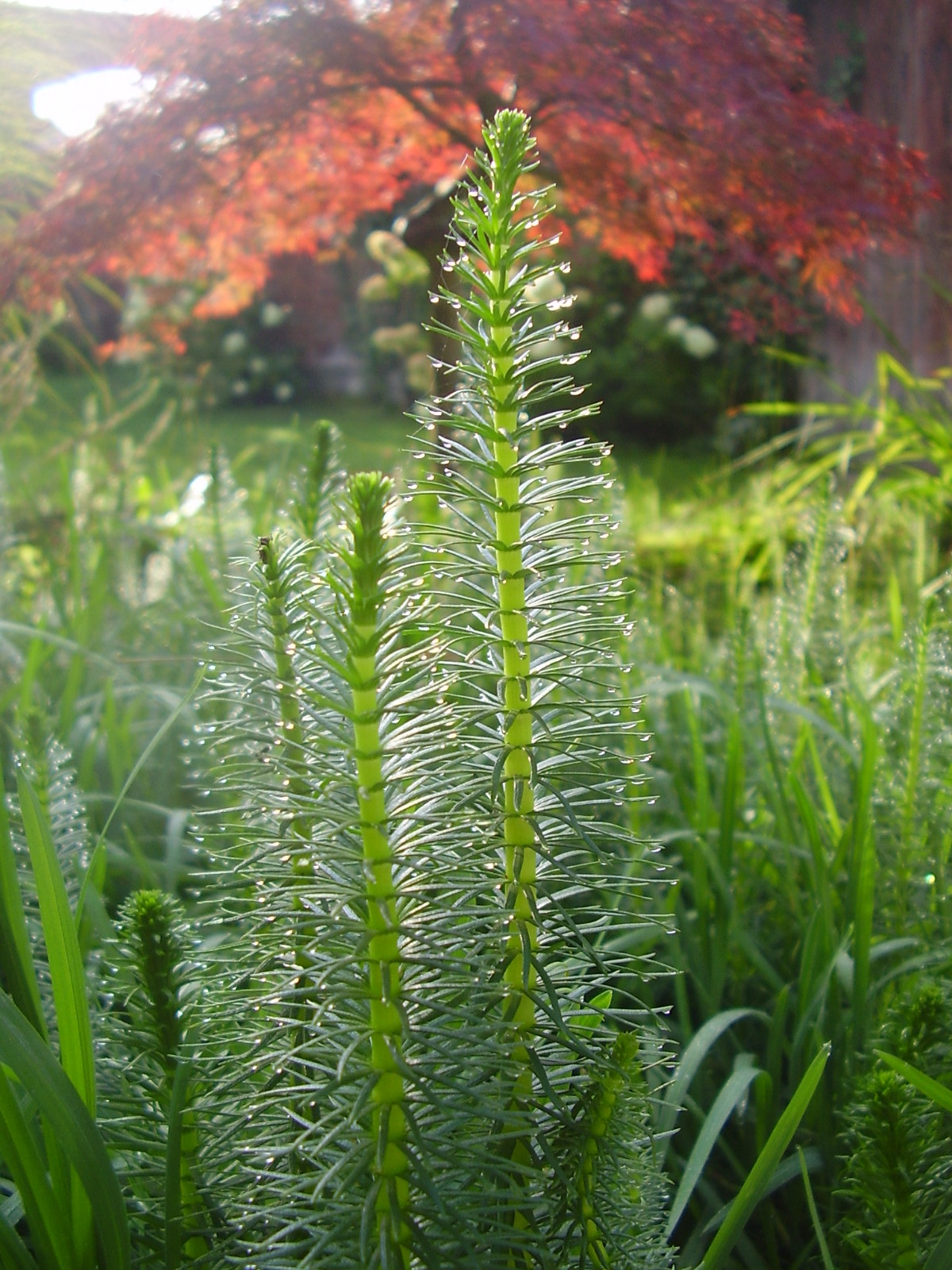
Along a stream, dewdrops on a delicate horsetail (Equisetum sp.) capture sunlight, scattering it into a miniature forest buzzing with insect life, amongst which is the common yet striking Pyrrhocoris apterus (Linnaeus, 1758). This heteropteran frequently shows aggregating behaviour and is found large populations, here photographed on the bark of the Czech national tree Tilia cordata Mill.
| Equisetum sp., Liberec, Czech Republic |
| Pyrrhocoris apterus (L., 1758) on Tilia cordata Mill. |
The periphery of the forest is characterized by a colourful scatter of berry clusters belonging to rowan (Sorbus aucuparia L.) and elder (Sambucus nigra L.), both of which have been traditionally used for food and medicine by settlers all over Europe. Further into the forest, as shade and shelter become predominant, ferns and mosses cover most of the clearing and make use of the abundant leaf litter.
| Sorbus aucuparia L. |
| Sambucus nigra L. |
| Ferns on the forest floor |
Conifers of the area include pines (Pinus sylvestris L.) and spruce (Picea abies (L.) H.Karst), sometimes bearing evidence of food-seeking woodpeckers on their old trunks. Angiosperms such as beech (Fagus sylvatica L.) are also common, with their deceased offering an excellent resource for several fungal specimens.
| seeds of Fagus sylvatica L. |
| Fagus sylvatica L. compost |
| fungus 1 |
| fungus 2 |
| clues left by woodpeckers |
Nymphalis antiopa (Linnaeus, 1758) and Vanessa atalanta (Linnaeus, 1758) are two beautiful and conspicuous butterflies found within the forest and elsewhere.
| Nymphalis antiopa (L., 1758) |
| Vanessa atalanta (L., 1758) |
Friday, August 12, 2011
Phillumenic conundrum
Prior to this event I had never heard of the obscure hobby of phillumeny, but what should have been a casual glance inside an antiques shop in Santa Cruz necessitated some brushing up on the matter. I could not resist leaving this singular item to gather dust on a shelf unless that shelf was mine.
| this is all I know about this set |
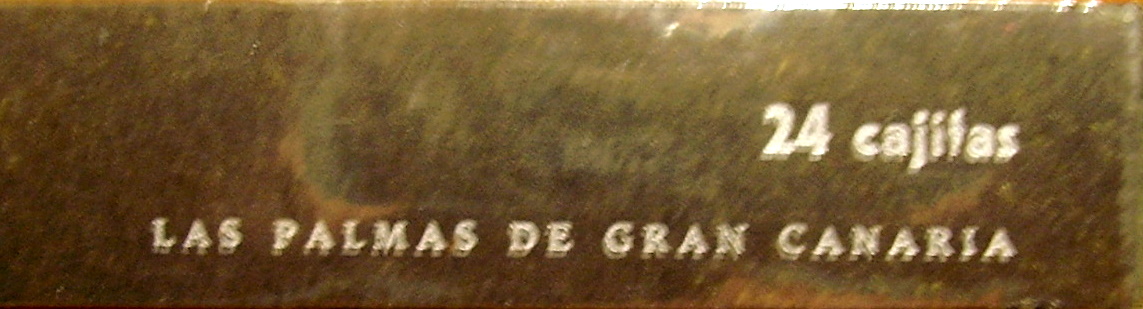
A defunct (?) match factory in Las Palmas (capital city of Gran Canaria), Fosforera Canariense, produced this nice set of 24 matchboxes sometime last century after its foundation in 1935. Information regarding such items is hard to come by, on-and-offline, therefore not much more is known at this stage.
The set is called Caracolas Marinas (marine snails) and features 24 species of molluscs (inexplicably consisting of one bivalve and 23 predominantly tropical, not-all-marine, gastropods) heavily inked onto a pale blue background. The way they are packaged makes it impossible to see what is on the hidden side of each matchbox, and where, presumably, the species identifications are printed.
Now, I am sorely tempted to tear open the polythene covering holding the set together in order to read them; on the other hand, doing so will detract from the neatness and value of the boxed set. I'm a stickler for 'accurate' identification (as opposed to mere Cypraea, Murex, Lambis, Harpa, Conus, Architectonica, Mitra, Cymatium etc.) but these cardboard versions will have to remain a mystery, at least until curiosity gets the upper hand.
| click on image for large version |
Saturday, August 6, 2011
Thursday, August 4, 2011
Flowers on the volcano
Following yesterday's journey we have now arrived close to the summit of El Teide. The landscape is a vast expanse of bleak volcanic rock, including obsidian, phonolite and trachyte, which form when lava solidifies according to different physico-chemical criteria.
| El Teide volcano |
Teide's most recent eruption dates back to 1909, and some tremors have been recorded in 2004, indicating a dormant volcano may become active in a few years' time.
![]() |
| El Teide's 1909 eruption, live (photo stolen from here) |
In any case, the plants seem quite happy about their choice of habitat. A large number of endemic species characterize Tenerife and many of these species are abundant high above the pine forest. The southern side of the Teide, in the Las Cañadas caldera, is a habitat known as subalpine scrub, dominated by shrubs of the legume Spartocystus supranubius L., together with bushes of the beautiful Pterocephalus lasiospermum Link.
| dark green shrubs of Spartocystus supranubius L., with Pterocephalus lasiospermus Link in the foreground |
| Spartocystus supranubius L. with seed-pods |
| Pterocephalus lasiospermus Link |
| flowers of Pterocephalus lasiospermus Link |
Amongst these one can also find the very interesting Cheirolophus teydis (C.Sm.) G.López, an endemic plant of Teide that is a very close relation of Malta's national (and also endemic) plant, Cheirolophus crassifolius (Bertoloni). Unfortunately all plants were only on the verge of flowering during this visit. Flowers of C. teydis are pale yellowish.
| Cheirolophus teydis (C.Sm.) G.López |
Adenocarpus viscosus (Willd.) Webb & Berthel. and several species of Echium are also very characteristic inhabitants of El Teide, characterizing landscapes with their yellow flowers and tall spikes respectively.
| Adenocarpus viscosus (Willd.) Webb & Berthel. |
| Echium sp. |
| Echium sp. flowers |
| lycaenid butterfly resting on Echium sp. |
Above the clouds of El Teide
The third largest volcano on earth (according to some sources, but not to others - it depends on how you go about measuring volcanoes) is found off West Africa, on Tenerife.
To see the majestic peak of this volcano, El Teide, one must traverse a height of about two kilometres of pine forest, dominated by the endemic Canarian pine Pinus canariensis C.Sm. This pine has developed an extraordinary way of utilizing the water available in the mist enveloping these forests - its leaves are tall and thin, allowing condensation of water droplets on their large surface area. This water trickles down, dropping into the soil and providing roots with much-needed hydration.
| Pinus canariensis C.Sm., 2.5km up east El Teide |
In some places, violent storms some years back have ripped the trees down, the trunks of which together with the flowing clouds produce an eerie atmosphere reminiscent of any horror film worth its salt:
![]() |
| wind-battered pine forest, c. 2km up east El Teide |
Subscribe to:
Posts (Atom)