Showing posts with label Mediterranean. Show all posts

Tuesday, January 17, 2012

Entomological Society of Malta - vol. 4 launch

Last Friday saw the launch of the 4th volume of ESM's excellent series of papers dealing with, as the name of the society implies, the entomology of the Maltese islands and their biogeographic context.

The event was held under the patronage of His Excellency Dr. George Abela, and three society members (including its chairman) delivered short speeches on the importance of scientific research, peer reviews, funding and the maintenance of high publication standards. 


The scope of the talks ranged from the general, all-encompassing importance of works by luminaries such as Max Planck and Thomas Kuhn, to the specialized methodologies employed by scientists dealing in what the public may perceive as the "dinja stramba ta' dud, nemel u nsetti oħra" (lit. strange world of bugs, ants and other insects).

On to the main issue at hand - and its contents. This collection contains:

1) a catalogue of the aphid species occurring in Malta, with 48 new records, together with a list of aphid parasitoids, with three new records, and a new record of a coccid
2) observations and records of tachinid, rhinophorid and cecidomyiid flies from Malta and other Mediterranean areas
3) observations and records of nepticulid and pyralid moths from Malta
4) a catalogue of Maltese Scarabeoidea with eight new records, with a discussion on possible extinction mechanisms for these very interesting beetles
5) short features aimed at the younger demographic

A sample illustration - Scarabaeus (Ateuchetus) semipunctatus Fabricius, 1792 and Scarabaeus (Ateuchetus) variolosus Fabricius, 1787

The website was not updated in time for the launch, therefore for more information on the society please contact

Dr. David Mifsud
Entomological Society of Malta
P. O. Box 9
Marsa, MRS1000
Malta

Thursday, January 12, 2012

Death of a Phoenix

Palms are a common sight in Malta, with the warm temperatures affecting the islands throughout most of the year being a perfect catalyst for their growth and proliferation. This said, indigenous species amount to just one - the low-growing, bushy Chamaerops humilis L., now practically extinct in the wild.

Chamaerops humilis L., photographed by Aron Tanti

The recent invasion of the red palm weevil Rhynchophorus ferrugineus (Olivier, 1790) has affected several of the ornamental palms of the genus Phoenix.

Rhynchophorus ferrugineus (Olivier, 1790) from www.cm-oaz.pt
 
The date palm, Phoenix dactylifera L., is a historically important North African species that may be distinguished by leaves arranged in wide silvery fronds. The picture beneath shows this species of palm affected by the Rhynchophorus beetle.

Phoenix dactylifera L. affected by the red palm weevil in Santa Venera, Malta

Phoenix sp. in Rome, Italy, with the one on the right showing symptoms of red palm weevil infestation

Phoenix canariensis Chabaud is a Canarian endemic which is frequently planted around the Mediterranean, not least in Malta. Unfortunately it is also affected by the weevil in question and several stately specimens from around the island have been destroyed.

Phoenix canariensis Chabaud in the main road of Floriana, Malta

The inhabitants of Tenerife certainly make excellent use of their endemic palm species!

Wednesday, January 11, 2012

Steno on Google

The 374th anniversary of birth of the 'father of geology' Nicolaus Stensen, better known by his latinized name Nicolas Steno, is commemorated today on Google with a doodle showing a stylized stratigraphic section similar to what he may have encountered to come up with his conclusions.


Steno was featured on this blog together with his contemporary Agostino Scilla in a post from 2010.

Monday, April 25, 2011

From the depths

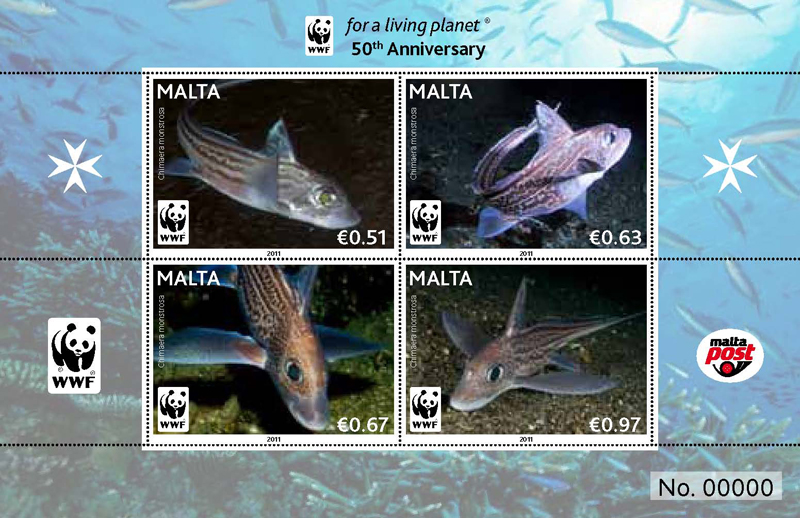
On the occasion of the World Wildlife Fund's 50th anniversary, the folks at Maltapost have issued a four-stamp set featuring the remarkable Chimaera monstrosa L., 1758.

Chimaera monstrosa L., 1758 on a Maltapost 2011 issue
Known in Maltese as Fenek il-Baħar (lit. sea rabbit), this is a cartilaginous fish, closely related to sharks, commonest at depths of between 500 and 800 metres in the Mediterranean and the East Atlantic. Populations are threatened by the fishing industry and may soon be categorized as 'vulnerable' under IUCN criteria.

Monday, January 24, 2011

An alien fish in Maltese waters

A research paper regarding the first recorded occurrence of the Pacific fish Oplegnathus fasciatus (Temminck & Schlegel, 1844) in Malta was recently published in the journal Acta Ichthyologica Et Piscatoria.

Oplegnathus fasciatus (Temminck & Schlegel, 1844)
Valletta, Malta

photo by John Attard

More information may be found here, while the work in its entirety may be accessed here.

Monday, August 9, 2010

Sharks in Malta Part III - Close encounters of the third kind

Today I was surprised that virtually all of the Google searches leading to this blog consisted of the same three keywords: 'shark in Malta'. I attributed this sudden interest to some sensational news item about which I hadn't heard anything so far - and sure enough, one glance at the Times of Malta web portal explained everything.

Without further ado, here's the link to the relevant news item and the accompanying video. Non-Maltese speakers will be disappointed, though!

Friday, July 9, 2010

Burst of purple...


... or indigo, lilac, anyway - whatever you want to call it. Cheirolophus crassifolius (Bertoloni) is much better known as Widnet il-Baħar, and it has been designated as the national plant of Malta. It is an endemic species with a troubled taxonomic history and embellishes cliffs with its beautiful blooms during most of summer. A very hardy plant which withstands highly alkaline soil, it has also been used as an ornamental and is frequently seen in roundabouts, public gardens and roads, though it remains very rare in the wild.


To read about the Maltese national tree please click here.

Wednesday, June 9, 2010

A Mediterranean inspiration


The plant shown above, Acanthus mollis L., is widely held by historians to be the inspiration behind a highly characteristic element of ancient Greek (Corinthian) and Roman architecture - the so-called 'Acanthus motif'. This feature is expressed mostly in column capitals, as shown below*.

For the Romans, the Acanthus plant held connotations of resurrection, as evidenced by the following quote from the architect Vitruvius:

The invention of the capital of this order is said to be founded on the following occurrence. A Corinthian virgin, of marriageable age, fell a victim to a violent disorder. After her interment, her nurse, collecting in a basket those articles to which she had shown a partiality when alive, carried them to her tomb, and placed a tile on the basket for the longer preservation of its contents. The basket was accidentally placed on the root of an acanthus plant, which, pressed by the weight, shot forth, towards spring, its stems and large foliage, and in the course of its growth reached the angles of the tile, and thus formed volutes at the extremities. - Marcus Vitruvius Pollio, 'De Architectura IV', 25 B. C.

Acanthus is a genus mostly native to the Mediterranean region, though it has been grown in many gardens around the world for its beautiful foliage and flowers. Its name in Maltese is Ħannewija.

*image by Jane Vadnal, University of Pittsburgh. Pictures of plant (1): Fiddien 27.V.2009; (2-3): Buskett 06.V.2009

Thursday, June 3, 2010

Sharks in Malta Part II - A killer reputation

The vast majority of sharks and rays frequenting Maltese waters are innocuous to humans, and even the largest of them is a timid filter-feeder - this is the legally protected basking shark - Cetorhinus maximus (Gunnerus, 1765).

The species after larger prey, such as the great white shark (Carcharodon carcharias Smith, 1838), may attack humans on occasion, and such one-off cases are so easy to sensationalize that the shark is now perceived as dangerous and fear-inspiring. Coupled with overfishing and pollution, this reputation has had grave consequences for shark populations around the world - both species mentioned above are considered as vulnerable by the IUCN.

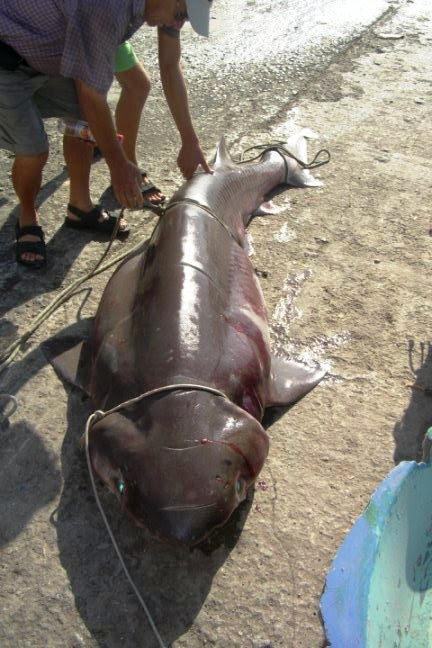
The following photographs are some archival finds documenting well-publicised shark catches in Malta throughout the years. Hopefully, awareness and education about the true nature of sharks will help keep such actions restricted to a few old pictures.

Alopias vulpinus (Bonnaterre, 1788) - off Gozo, 2000


Isurus oxyrhincus Rafinesque, 1810 - 10km off Ġnejna, 2005


Hexanchus griseus (Bonnaterre, 1778) - off Marsaxlokk (2008?)


Carcharodon carcharias Smith, 1838 - off Filfla, 1987

References:

Fergusson, I., Compagno, L. J. V. & Marks, M., 2005. Carcharodon carcharias. In: IUCN Red List of Threatened Species Version 2010.1. [WWW Document, url - www.iucnredlist.org; last accessed 03.VI.2010]

Fowler, S. L., 2005. Cetorhinus maximus. In: IUCN Red List of Threatened Species Version 2010.1. [WWW Document, url - www.iucnredlist.org; last accessed 03.VI.2010]

Monday, May 31, 2010

Sharks in Malta Part I - 'L-Ilsna ta' San Pawl'

The Sicilian Agostino Scilla was one of the first Europeans (together with Nicholas Steno in Denmark) to systematically study fossils and extract information about them empirically, as opposed to his contemporaries' tendency to attribute fossils to supernatural forces or a slew of mythical creatures.

Frontispiece of Agostino Scilla's 'La Vana Speculazione', 1670 - note the variety of fossils on the lower right

Both Scilla and Steno arrived to conclusions that were beginning to shape the science of geology as it is known today, in particular the then-controversial notion that fossils are derived from once-living organisms.

Interestingly, some of the fossils which both chose to illustrate in their works were obtained from Malta. These fossils are the famous glossopetrae (tongue stones), or, more accurately, fossil shark teeth, which during the Medieval, Renaissance and Baroque periods were considered to be a miraculous cure for a variety of ailments (Zammit Maempel, 1975; 1989). Malta was the centre of a lucrative business in these shark teeth and it is not hard to see how specimens could have come in Scilla and Steno's possession.

Carcharocles megalodon (Agassiz, 1843) teeth from the C2 Phosphorite Conglomerate, Malta

Most of these glossopetrae belong to the extinct Carcharocles megalodon (Agassiz, 1843), one of the largest fish ever to exist on Earth. An approximation of its size (in grey and red) compared to the modern (and morphologically similar) great white shark, Carcharodon carcharias (L., 1758) (in green) can be seen below.


The local name for these particular fossils is 'Ilsien San Pawl' (= St. Paul's Tongue) due to the belief that they formed inside the rocks while St. Paul was shipwrecked on Malta in the year 60 A. D. (Acts of the Apostles, 28: 2-7). During this episode, St. Paul shrugged off a snake which attacked him and threw it into an open fire, symbolically ridding the islands of poisonous 'vermin'.

'St. Paul's Shipwreck', by Stefano Erardi, 1683 - note the snake falling out of the main figure's hands into the fire

Carcharocles teeth from the collection of Sir Hans Sloane are also the oldest Maltese fossils in the British Museum (cf. Galea Bonavia, 2003).

References:

Galea Bonavia, C., 2003. Carcharocles megalodon (Agassiz) (Lamnidae: Neoselachae): A historical note. The Central Mediterranean Naturalist, 4 (1): 105.

Scilla, A., 1670. La vana speculazione disingannata dal senso: lettera responsiva circa i corpi marini, che petrificati si trovano in varii luoghi terrestri. Napoli: Colicchia.

Sloane, H., undated. Se la Virtu’ alessifarmaca della Terra, Glossopetre conchiti, Achini ed altre pietre figurate che si cavano dalle Rocche di Malta, sia innata o Miraculosa. Unpublished manuscript, Sloane Collection – British Library MS no. 763.

Zammit Maempel, G., 1975. Fossil sharks' teeth: a medieval safeguard against poisoning. Melita Historica, 6: 391-406.

Zammit Maempel, G., 1989. The Folklore of Maltese fossils. Papers in Mediterranean Social Studies, 1: 1-29.

Saturday, May 1, 2010

Yet another cold-blooded encounter

The elegant and perfectly camouflaged Telescopus fallax (Fleischmann, 1831) basks in the late afternoon sun on garigue close to Baħrija, Malta.


Apart from the characteristic patches on its skin, the easiest way to distinguish this species is from its slit-like pupils, similar to those of cats, earning it the common English name of 'cat snake'. All other snake species of the Maltese islands have round pupils.

Thursday, April 22, 2010

The Maltese national tree


Tetraclinis articulata (Vahl, 1791) is a North African conifer from the Cypress family. It is also the national tree of Malta, and is known locally as 'is-siġra tal-għargħar'. Most specimens encountered in the wild grow on clay slopes and appear to thrive in quite arid habitats. The picture above shows a mature specimen from the Maqluba depression at Qrendi, while below a young individual from Għajn Tuffieħa bay can be seen.

Saturday, April 17, 2010

A flawed gem


Luria lurida (Linn., 1758) is a common snail from the family Cypraeidae found in shallow Maltese waters. The specimen above was very timid and did not emerge from its shell fully, even after 30 minutes of waiting on my part. However, the tip of the siphon can be seen on the right hand side, together with a very small part of the mantle covering the shell's edge.

Gastropods happen to be a favourite food of their far more cunning relative, the octopus. An octopus can usually pull other snails right out of their shell, but L. lurida has a narrow aperture and is well-protected in this regard. Besides, it withdraws deeply into its shell, beyond significant reach of the octopus' tentacles. The octopus therefore resorts to drilling a hole in the shell with its tongue, enabling it to secrete enzymes and extract the animal (Wodinsky, 1969).

Such drill-holes are commonly found on beached L. lurida, as can be seen in the photograph below.


Wodinsky, J., 1969. Penetration of the shell and feeding on gastropods by Octopus. American Zoologist, 9 (3): 997-1010.

Wednesday, March 24, 2010

Another cold-blooded encounter


This beautiful reptile, from the Qbajjar area in Western Gozo, is a juvenile specimen of the Western Whip Snake, Hierophis viridiflavus (Lacépède, 1789). It shows a different colour than sexually mature adults, which are of an intense black colour (P. J. Schembri, pers. comm. III.2010).

Sunday, March 21, 2010

A meeting of old and new


Sphincterochila candidissima (Draparnaud, 1801) is a very noticeable denizen of seaside cliffs and coralline karsts of the central Mediterranean. Right now (in addition to a period in late October-November) this species is highly active in Malta, with most reproduction and egg-laying taking place in time before the imminent summer season forces the animals to aestivate.

The snails are white for optimum reflection of heat, and construct hardy epiphragms (aperture coverings) from mucus and calcite dust, which prevent considerable water loss by evaporation.

The photograph shows a live mature individual, resting next to the long-dead shell of a presumed ancestor. The latter is embedded in a Holocene rupestral deposit. The specimens come from a small population at Rdum tal-Madonna, Mellieħa.

Wednesday, March 17, 2010

New project uploaded


A small website required for a University assignment has been uploaded at the link pasted below:

Maltese Endemic Landsnails

Virtually all photographs included are appearing on the web for the first time.

The website expires this year, so I will upload the content here as soon as that occurs.

Sunday, March 7, 2010

A cold-blooded encounter

This is the skink Chalcides ocellatus Forsskål, 1775, a circum-Mediterranean species known in Maltese as Xaħmet l-Art. This specimen is from Żejtun and is obviously still juvenile.

More information about the author of this species can be found in my older post here.

Thursday, March 4, 2010

More alien blobs

Almost a mere month after the first record of the jellyfish Cassiopea andromeda from Malta, a new cnidarian species is confirmed as existing in our waters.

This time, far from being anything harmless as in the above-mentioned case, the culprit is the painful stinger Physalia physalis (L., 1758), a hydrozoan (not a true jellyfish) known better as the Portuguese Man-Of-War. The species is more or less frequent in the Atlantic Ocean and only ventures into the Mediterranean occasionally.

The sighting at Ċirkewwa was fortunately recorded on camera by Mr. Adrian Buttigieg, lending more credibility to accounts of sightings off St. Paul's Bay in 2009.

Saturday, December 26, 2009

Melarhaphe neritoides - before and after

Melarhaphe neritoides (Linn., 1758) is a seasnail which spends the summer months aestivating in cracks on bare rock, in a part of the shore where the sea does not reach, sealing up its aperture with a solid horny operculum to prevent losing water in the extreme heat accumulating during the day.

As soon as winter comes, more powerful waves and heavier mist start wetting the area where the snail lives, eventually filling pools in the rock and allowing the snail to resume its 'normal' lifestyle - moving about, grazing on algae, mating and laying eggs, in time before the dryness returns.

The following photographs were taken in the same rock hollow in August (photo 1) and December (photo 2) on the limestone shore of Buġibba, Malta, showing the snail during its period of inactivity and its subsequent 'resurrection'.


Friday, September 11, 2009

Research Paper 1

Mifsud, C. & Cilia, D. P. (2009). On the presence of a colony of Brachidontes pharaonis (P. Fischer, 1870) (Bivalvia: Mytilidae) in Maltese waters (Central Mediterranean). Triton, 20: 20-21.

Downloadable here: http://www.box.net/shared/qj8q729mcn
Related Posts Plugin for WordPress, Blogger...